
Search News
Industry Portal
Hot Articles
- EU Tightens CHP Import Compliance to 72 HoursEU Tightens CHP Import Compliance to 72 Hours: learn how the new EU rule impacts CHP gas generating units, customs timing, and document readiness for exporters, buyers, and logistics teams.
- Non-Road Diesel Engines Price Guide: What Buyers Should Compare Beyond Unit CostNon-road diesel engines price is only the starting point. Compare fuel use, emissions compliance, maintenance, parts support, and total ownership cost before you buy.
- EU Rule Takes Effect for CHP Gas Units on 1 August 2026CHP Gas Units face a new EU compliance rule from 1 August 2026. Learn how EN 12952-15:2026 affects Biogas Generators, certification, shipments, and EU market access.
Popular Tags




Global Container Transport Is Creating New Demand for Specialized Trailers
International freight is becoming more containerized, more time-sensitive, and more cost-conscious. Ports, inland logistics hubs, construction supply chains, cross-border trade routes, and industrial exporters all need transport equipment that can move containers safely and efficiently. As a result, demand for the skeleton container chassis semi trailer is increasing across many global markets.
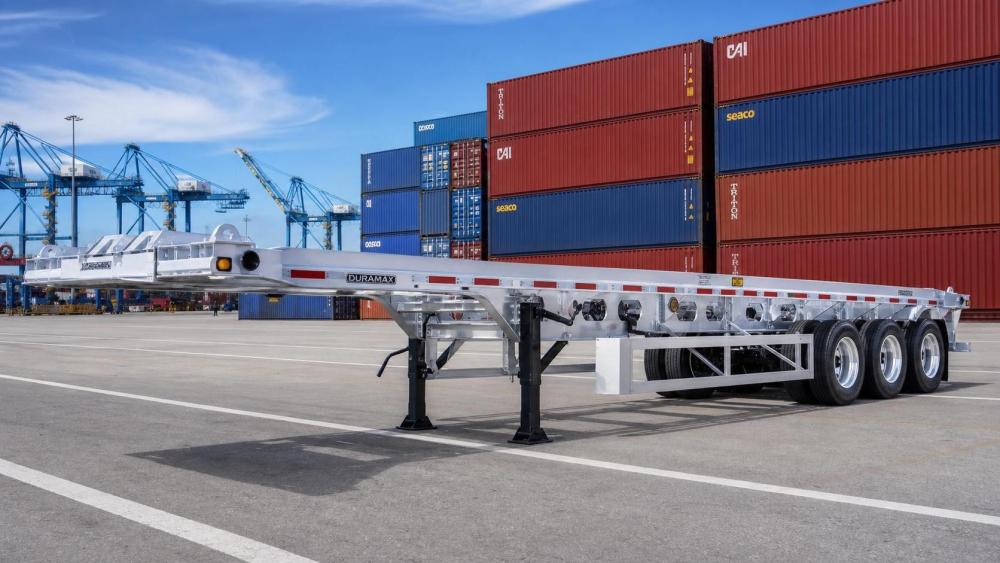
A skeleton container chassis semi trailer is designed specifically for container transportation. Unlike general cargo trailers, its structure is optimized to carry standard containers such as 20ft, 40ft, and sometimes 45ft units. The chassis design reduces unnecessary weight while maintaining strength at key load-bearing points. This makes it practical for port transport, highway logistics, dry cargo movement, and long-distance container delivery.
For logistics operators, trailer selection has become a strategic decision. A trailer is no longer just a piece of transport equipment. It affects fuel consumption, payload efficiency, safety, maintenance cost, loading speed, and fleet profitability. This is why container chassis trailers are gaining attention from fleet owners, freight forwarders, port operators, and infrastructure contractors.
Why Container Chassis Trailers Are Becoming More Important
The first driver is the steady growth of containerized trade. Even as global trade patterns shift, containers remain the backbone of international goods movement. They are used for manufactured goods, raw materials, machinery, consumer products, industrial parts, agricultural products, and construction materials. Every container must be moved between ports, warehouses, rail terminals, factories, and distribution centers. This creates continuous demand for reliable chassis trailers.
Another driver is the expansion of multimodal logistics. In many regions, containers are no longer moved only from port to nearby warehouse. They may travel from ocean port to inland rail yard, from rail terminal to industrial park, or from border checkpoint to regional distribution hub. This requires transport equipment that can handle repeated loading, unloading, long-distance travel, and different road conditions.
Skeleton chassis trailers fit this model because they are designed around container movement. Twist locks, axle configuration, suspension, kingpin design, main beam strength, and tire layout all influence performance. A well-matched container chassis helps improve transport safety and reduce operational delays.
Fleet Efficiency Is Driving Trailer Procurement Decisions
Fleet owners are under pressure to reduce operating costs. Fuel prices, driver costs, road tolls, maintenance expenses, insurance, and delivery deadlines all affect profitability. In this environment, trailer weight and structural efficiency matter.
A skeleton container chassis semi trailer can help reduce tare weight compared with heavier general-purpose trailer designs. Lower tare weight may improve payload flexibility and fuel efficiency, especially for long-distance operations. At the same time, the chassis must remain strong enough to handle container loads under real road conditions. This balance between lightweight design and heavy-duty reliability is one of the most important product trends in the market.
Buyers are increasingly asking practical questions before purchasing: What is the payload capacity? What type of steel is used? How strong is the main beam? Is the trailer suitable for 20ft and 40ft containers? How many twist locks are included? What suspension options are available? Can mechanical suspension, air suspension, or bogie suspension be selected? What axle brands and tire configurations are supported? These details directly affect fleet performance.
Port and Inland Logistics Growth Supports Market Expansion
Port infrastructure development is another major factor supporting demand. Many countries are investing in port upgrades, dry ports, logistics parks, rail-road intermodal centers, and industrial corridors. These projects increase the need for container handling and container transport vehicles.
In emerging markets, the demand is especially strong because logistics networks are still expanding. As manufacturing, mining, agriculture, and construction sectors grow, more goods need to move through container systems. In these regions, buyers often prioritize durable trailers that can handle rougher roads, heavy loads, and long operating hours.
In developed markets, demand may come more from fleet renewal and efficiency upgrades. Older trailers may be replaced with lighter, safer, and more compliant chassis designs. Operators may also look for trailers with better braking systems, improved suspension, LED lighting, pressure monitoring options, and safer container locking systems.
Durability and Structural Strength Remain Key Buying Factors
Although lightweight design is important, durability remains essential. Container chassis trailers often work in demanding conditions. They may operate near ports with heavy traffic, on highways with long travel distances, or in regions with uneven road surfaces. Repeated load cycles, braking forces, turning stress, and container weight all place pressure on the frame.
This is why the main beam, cross members, welding quality, steel plate selection, and anti-corrosion treatment are central to product value. Buyers want trailers that can perform reliably over time and reduce maintenance interruptions. A low-cost trailer may become expensive if it suffers from frame deformation, cracked welds, unstable suspension, or frequent component replacement.
Surface treatment is also important. Container chassis trailers may operate in coastal areas where salt, humidity, and corrosion risks are higher. Sandblasting, primer coating, and quality painting can help extend service life. For export markets, buyers often check whether trailers are suitable for local weather and operating environments.
Safety Standards Are Becoming More Important in Global Markets
Safety is becoming a stronger purchasing factor across commercial transport. Container trailers carry heavy loads, and any failure can create serious road risks. Buyers now pay more attention to braking systems, lighting, suspension stability, tire condition, kingpin quality, twist lock reliability, and load distribution.
LED lighting, dual-circuit wiring, optional tire pressure monitoring, and automatic tire inflation systems are becoming more attractive features for fleet operators. These upgrades support safer long-distance operation and reduce unexpected downtime.
Regulatory compliance also matters. Different markets may have different rules for axle load, trailer dimensions, lighting, braking, reflective markings, and roadworthiness. Export buyers need suppliers who understand that a trailer must not only be strong, but also adaptable to local transport standards. This is especially important for companies exporting vehicles to the Middle East, Africa, South America, Southeast Asia, and other regions with varied road and regulatory conditions.
Customization Is Becoming a Competitive Advantage
The container chassis trailer market is not one-size-fits-all. Buyers may need different axle configurations, suspension systems, twist lock layouts, payload capacities, tire sizes, paint colors, kingpin specifications, and frame dimensions. Some buyers focus on port short-haul operations, while others need trailers for long-distance highway transport. Some fleets operate on well-developed roads, while others face rough construction routes or rural logistics conditions.
This creates strong demand for customized trailer solutions. A supplier that can adjust technical specifications according to customer needs has a clear advantage. For example, buyers may request a trailer suitable for 20ft and 40ft containers, reinforced beams for heavy-duty use, air suspension for smoother transport, or mechanical suspension for durability and easier maintenance.
Customization also includes export documentation, branding, spare parts support, and loading arrangements. International buyers often need clear communication and reliable shipment coordination. The more complete the service, the easier it is for customers to make purchasing decisions.
Container Transport Equipment and Cross-Border Trade
Cross-border trade is another important growth driver. Many countries depend on imported construction materials, industrial products, agricultural machinery, consumer goods, and energy equipment. Container chassis trailers are needed to move these goods from ports to inland markets.
In regions where road freight is a dominant transport method, chassis trailers play a central role in supply chain performance. Delays in container movement can affect warehouse operations, factory production, retail delivery, and construction timelines. Reliable transport equipment helps reduce these risks.
For logistics companies, having enough suitable trailers can improve response speed. When container volumes rise suddenly, fleets with adaptable chassis trailers can take on more orders. This flexibility is valuable in markets where seasonal peaks, infrastructure projects, or commodity trade flows create uneven transport demand.
Market Outlook for Skeleton Container Chassis Semi Trailers
The market outlook for skeleton container chassis semi trailers remains positive because container logistics will continue to support global trade. Demand will come from port operations, shipping-related logistics, inland transport, cross-border trade, construction supply chains, industrial distribution, and fleet replacement.
Several trends are likely to shape future purchasing decisions. First, buyers will continue to look for trailers that balance strength and weight. Second, safety and compliance features will become more important. Third, customization will remain a key factor because transport conditions vary widely by country and application. Fourth, suppliers with reliable export experience and full-process trade support will be more attractive to international buyers.
Fleet operators are also likely to focus more on lifecycle cost. Instead of choosing only the lowest purchase price, professional buyers will evaluate durability, maintenance needs, fuel efficiency, spare parts availability, and resale value. This creates opportunities for suppliers that can provide stable quality and practical technical support.
How Buyers Should Evaluate a Container Chassis Trailer Supplier
When selecting a supplier, buyers should consider both product specifications and service capability. Product factors include steel quality, main beam height, payload capacity, axle configuration, suspension type, twist lock arrangement, braking system, tire specifications, paint process, and welding quality.
Service factors are just as important. Buyers should check whether the supplier can provide technical consultation, customization, export packaging, shipping support, documentation, and after-sales communication. For international buyers, a professional supplier can reduce procurement risk and simplify the whole purchasing process.
A good container chassis trailer supplier should understand that customers are not just buying a trailer. They are buying transport capacity, delivery reliability, and long-term fleet performance.
Conclusion: Container Chassis Trailers Are Becoming Strategic Assets in Freight Logistics
The skeleton container chassis semi trailer is becoming more important as global logistics systems continue to rely on containerized freight. Its lightweight structure, container-specific design, and operational flexibility make it a practical solution for modern transport fleets.
As freight buyers face higher cost pressure, tighter delivery schedules, and more complex trade routes, trailer quality and suitability matter more than ever. The right chassis trailer can improve payload efficiency, support safer transport, reduce downtime, and strengthen fleet competitiveness.
For global buyers, the best procurement strategy is to choose trailers that match real operating conditions rather than focusing only on price. For suppliers, the opportunity lies in providing durable structures, flexible specifications, export-ready service, and reliable communication. As container transport continues to expand, skeleton container chassis semi trailers will remain a key equipment category in the future of global freight logistics.
Recommended News